Why Choosing the Right Mixer Matters
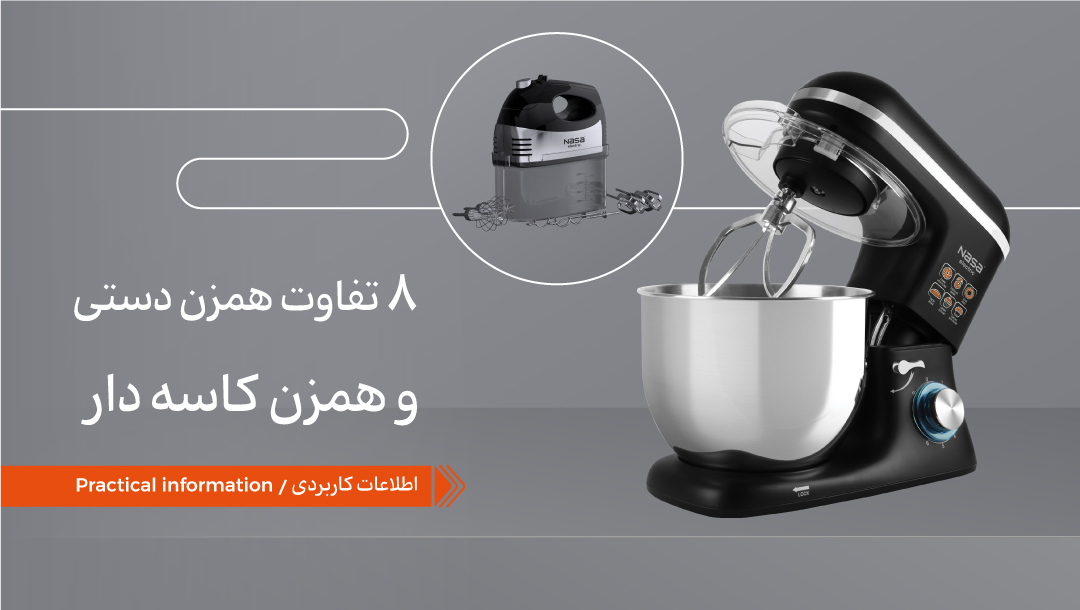
Having the right mixer in your kitchen can reduce cooking time, improve the quality of your meals and desserts, and make the overall cooking experience more enjoyable. Many users are unsure whether a hand mixer or a stand mixer is better. In this article, we explore 8 key differences between hand mixers and stand mixers and provide tips for choosing the best model to suit different cooking needs.
Motor Power: Which One Is Right for You?
One of the most important differences between a hand mixer and a stand mixer is their motor power.
- Stand mixers generally have more powerful motors, allowing them to handle heavy doughs, large cakes, and professional baking with ease. If you’re into professional baking or working with dense doughs, this higher power helps you save time and achieve consistently excellent results.
- Hand mixers are ideal for lighter tasks such as whipping cream, beating eggs, and making sauces. They are lightweight, compact, and quick, making them very convenient for everyday cooking. However, they are not suitable for heavy doughs or large-scale baking.
For a professional home cooking experience, you can check out the NASA Electric Stand Mixer, model NS-974. This model features a powerful motor and user-friendly design, allowing you to prepare heavy doughs with ease and without extra effort.
Capacity and Workload Which Model Meets Your Needs?
- A stand mixer typically comes with a large bowl and can easily handle high volumes of dough, cake batter, or pastries. For those engaged in professional baking, bread-making, or large cakes, this feature is a major advantage.
- A hand mixer is ideal for small, quick tasks such as beating a few eggs or making light sauces. It is compact and lightweight, but not suitable for large quantities, and baking in bulk can be time-consuming and tiring.
If you’re looking for a stand mixer with high capacity, ideal for large batches, the NASA Electric Professional Stand Mixer, model NS-976, is an excellent choice.



نظرات کاربران